You can stop performing here.
Most people who walk into Sylvaris are looking at a struggling career, or a hard choice about their education. Many are also tired of performing: the good student, the successful professional, the one who has it together. You don’t need to be any of them here.
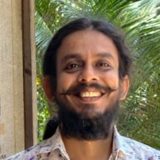
Not a diagnosis. A conversation between peers.
Asking for help still carries a stigma. Sylvaris is built to feel different: a calm room, an open conversation, and no labels at the door.
I meet everyone as a peer. Difficulty is real, and I take it seriously. Instead of reaching for a label, I try to understand it from where you stand.
I try to be present in the way Carl Rogers taught: listening closely, accepting you as you are, and being genuine with you. You won’t be judged, labelled or fixed.
I trust you to find your own answers, because I believe everyone is capable of incredible change with the right support and resources.
There is no need to try.
When you are as you are, what you want tends to come to you, instead of you chasing it down.
When we learn to do our duty, we find the magic in the ordinary. That is the difference.
It changes how rest works, too. When you need a vacation, you can meditate instead. A weekend stops being a time for revenge rest and becomes time you actively engage with.
I don’t perform any more. It’s most obvious when I’m teaching.
I’d like you to feel nothing. Literally nothing.
From there, you begin to notice the difference between emptiness and hollowness. Emptiness has room in it. Hollowness has something missing.
That’s what the 15 minutes of guided meditation are for. Meditation gives you a taste of what life can be like all the time.
When you don’t know
“I don’t know what I want.”
That’s a good place to begin. We sit and meditate, and often it comes. If it helps, I’ll share the three golden rules of Dr P. N. Thomas:
- Observe yourself without judgement.
- Maintain social and financial standing.
- Eat, rest, and exercise.
Not “what’s wrong with you?” but “what keeps you well?”
I prefer salutogenesis, an idea from the sociologist Aaron Antonovsky. It starts with a simple question: what keeps you well, and how do we build more of it? We look at whether your life feels:
and we work from there.
Then we build self-efficacy, your own belief that you can, through PERMA, Martin Seligman’s model of wellbeing. Small, real wins in each:
Yoga means to yoke: to join.
Wellbeing isn’t only in your head. The Yoga Sutras are the spine of how I work, and asanas are everywhere in it. For me, yoga is life.
I’m a 200-hour certified yoga teacher. I also run, sit in meditation, lift weights, train calisthenics and MMA, kayak, cycle, and ride motorcycles on track and road. Movement is part of how we work, in whatever form suits you.
Sylvaris is a way to discover yourself.
It is
- A way to discover yourself
- A conversation between peers
- A calm room with no labels at the door
It isn’t
- Traditional therapy, or a replacement for it
- A yoga class
- A diagnosis, or a prediction of one right career
Tranquillity.
And, very often, clarity. I love the clarity people have once we’re done.
Settle. Observe. Choose.
Start a conversation with Aditya about the Clarity Call or guided Test.
WhatsApp Aditya at +91 96866 85508.
Sylvaris isn’t a substitute for medical or psychiatric care. If you’re in crisis, please contact a doctor or a local helpline right away. In India, Tele-MANAS is free and open around the clock: call 14416 or 1-800-891-4416.